

If you are weighing where to invest your learning time, teacher professional development pays off most when it is content focused, active and sustained. A review of 35 rigorous studies found seven shared features.
| Item | Value |
|---|---|
| Studies reviewed | 35 methodologically rigorous studies |
| Shared features of effective professional development | Seven |
| Report published | June 5, 2017 |
| Literature searched | The last three decades |
| Publisher | Learning Policy Institute, Palo Alto, CA |
These figures come from the Learning Policy Institute report page and its companion fact sheet. Sources can be updated or revised, so check them before you rely on the numbers.
What teacher professional development actually means
The Learning Policy Institute applies an outcome-based test: development is effective when teachers’ practices change and student learning outcomes improve, according to its report page. Sitting through a session does not meet that test. The learning has to change what happens in the classroom.
That test comes from a report by Linda Darling-Hammond, Maria E. Hyler and Madelyn Gardner, published June 5, 2017, as the fact sheet shows.
The review behind it covered 35 studies chosen for methodological rigour. They emerged from a literature search over the last three decades, per the report page.
The authors also note that many initiatives appear ineffective at changing teachers’ practices and student learning, according to the fact sheet. That is the reason to be choosy about what you sign up for.
One limit is worth stating plainly. The review covers professional development in general and does not set out to test online formats, so the sections below that apply it to online settings are editorial interpretation, not research findings.
The seven features of effective professional development
The report found that effective professional development incorporates most, if not all, of seven elements, according to the Learning Policy Institute. Here they are in short form:
- Content focused: it centres on teaching strategies tied to specific curriculum content, such as mathematics, science or literacy.
- Active learning: you design and try out teaching strategies yourself.
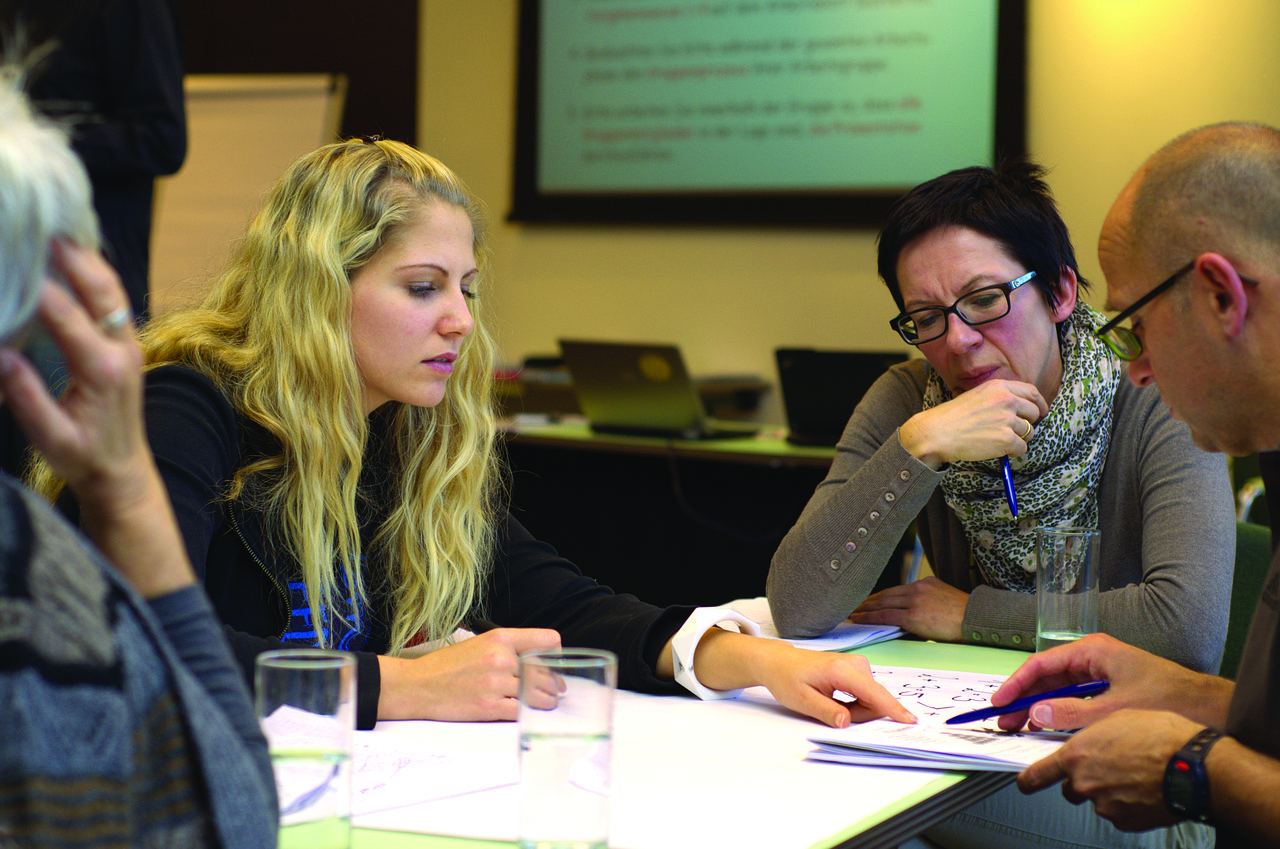
- Collaboration: you share ideas with colleagues, often in job-embedded settings.
- Models of effective practice: you see what good practice looks like.
- Coaching and expert support: someone shares expertise focused on your needs.
- Feedback and reflection: there is built-in time to think, get input and adjust.
- Sustained duration: you get enough time to learn, practise and reflect.
The list is useful as a checklist. A one-off workshop on a tool may tick a single box, while a programme built around your own subject, your own classes and repeated feedback ticks many.
The report singles out the move away from learning that is lecture based. According to the fact sheet, active learning moves away from traditional models and environments that are lecture based and have no direct connection to teachers’ classrooms and students.
Applying the seven features to online learning
Teaching online adds new tools but not new principles of learning. The following sections are an editorial reading of how each feature might look when your professional development, or your teaching, happens on a screen.
Content focus: start from your subject
The report describes discipline-specific curriculum development and pedagogies as the core of this feature, per the fact sheet. Online, that suggests favouring learning about how your subject is taught in a digital course over generic tool tours. A tour of every button in a platform rarely answers how to teach fractions or essay structure there.
Active learning: build something real
Active learning, in the report’s words, engages teachers directly in designing and trying out teaching strategies, as the fact sheet describes. In practice, that could mean building a small module in a sandbox course rather than only watching a recorded demonstration. If you will ask your students to do something, try doing it first.
Collaboration: learn alongside others
High-quality professional development creates space for teachers to share ideas and collaborate, often in job-embedded contexts, according to the fact sheet. Online cohorts, discussion forums and shared planning documents can all serve this purpose. Another route is classroom visits between colleagues, which the guide on peer observation for teachers covers in detail.
Models of practice: look at real examples
The report says teachers may view models such as lesson plans, unit plans, sample student work, observations of peer teachers, and video or written cases of teaching, per the fact sheet. Online, that could include a well-built course shell, a recorded lesson or annotated student work. Seeing a finished example makes an abstract recommendation concrete.
Coaching and expert support: find a second pair of eyes
Coaching and expert support involve the one-on-one sharing of expertise about content and evidence-based practices, focused on individual needs, according to the fact sheet. A mentor who reviews your draft course and comments on it fits that description. Video calls make this possible across schools and time zones.
Feedback and reflection: close the loop
The report finds that high-quality learning frequently provides built-in time for teachers to think about, receive input on and change their practice, as the fact sheet puts it. A short written note after each online lesson is a simple start, and the page on teacher reflection practice offers ways to structure it.
Sustained duration: give it time
Effective professional development gives teachers adequate time to learn, practise, implement and reflect upon new strategies, according to the fact sheet. For online work, that argues for a programme spread across a term with practice between sessions, rather than a single intensive day.

Building your own development plan
The report says professional development should be linked to identified teacher needs and should ensure teachers have a say in the learning they require, per the fact sheet. A personal plan puts that into practice. These steps are an editorial suggestion built around the seven features:
- Name one need. Pick a specific problem in your own classes, such as feedback on written work or clear online instructions.
- Choose subject-relevant learning. Look for options that deal with your content, not only with general technology.
- Pick a format where you practise. Our overview of online teacher training courses helps you compare what is on offer.
- Arrange feedback. Ask a colleague or mentor to look at what you build.
- Protect the time. Schedule short, regular sessions instead of hoping for a free week.
- Keep a record. Note what you tried and what changed for your students.
If your goal is a new role, the guide on how to become an online teacher sets out the path. Those who are just starting may prefer the hub on online teaching basics first.
Two skill areas tend to come up in nearly every plan. The first is covered in digital skills for teachers, and the second in instructional design for teachers. The hub on learning platforms for teachers helps with the practical choice of where to build.
Evidence of your learning can take several forms. You might pursue an online teaching certificate, or smaller badges, as explained in the piece on microcredentials for teachers. A credential records that you took part. It does not by itself show that your practice changed.
Checking a programme against the evidence
Before you commit time or money, hold a programme up against the seven features. The questions below are an editorial tool, not a scoring system from the report:
- Does it focus on teaching strategies tied to specific content?
- Will you design and try out strategies, or mostly listen?
- Is there a way to work with other teachers?
- Are there models, such as sample lessons or student work, to study?
- Does someone with expertise respond to your individual needs?
- Is there built-in time for reflection and feedback?
- Does it run long enough for you to practise and adjust?
A programme that answers yes to most of these is closer to what the research describes. As the report page puts it, effective professional development incorporates most, if not all, of the elements, so a few gaps are not necessarily disqualifying.

Conditions that help or hinder professional learning
Even well-designed learning depends on the setting around it. The report states that inadequate resourcing, including needed curriculum materials, frequently exacerbates inequities and hinders school-improvement efforts, according to the Learning Policy Institute. It also names a failure to align policies toward a coherent set of practices as a major impediment, as is a dysfunctional school culture.
For school leaders, the report suggests several actions, listed on the fact sheet:
- Evaluate and redesign the use of time and schedules to create opportunities for professional learning and collaboration.
- Run needs assessments using data from staff surveys to find the learning educators most need and want.
- Develop expert teachers as mentors and coaches for other educators.
The report also examines professional learning communities as a model that incorporates several effective elements and supports student learning gains, per the report page. If you teach in a team, raising these ideas with colleagues can be a practical first move.
Frequently asked questions
What is teacher professional development?
Show answer
It is structured learning for teachers. The Learning Policy Institute defines the effective kind as learning that results in changes in teacher practices and improvements in student learning outcomes, as stated on its report page.
How many features of effective professional development did the research find?
Show answer
The Learning Policy Institute’s reviewers identified seven widely shared features after examining 35 rigorous studies, according to its fact sheet and report page. The report was published June 5, 2017.
Does this research cover online professional development?
Show answer
The review addresses professional development in general and does not set out to test online formats. Applying it online is a reasonable interpretation, but it is not a finding of the report.
Is a certificate enough to show my development worked?
Show answer
Not on its own. The report’s definition centres on changes in practice and student learning, so a certificate is best treated as a record of participation alongside your own evidence of what changed in class.